
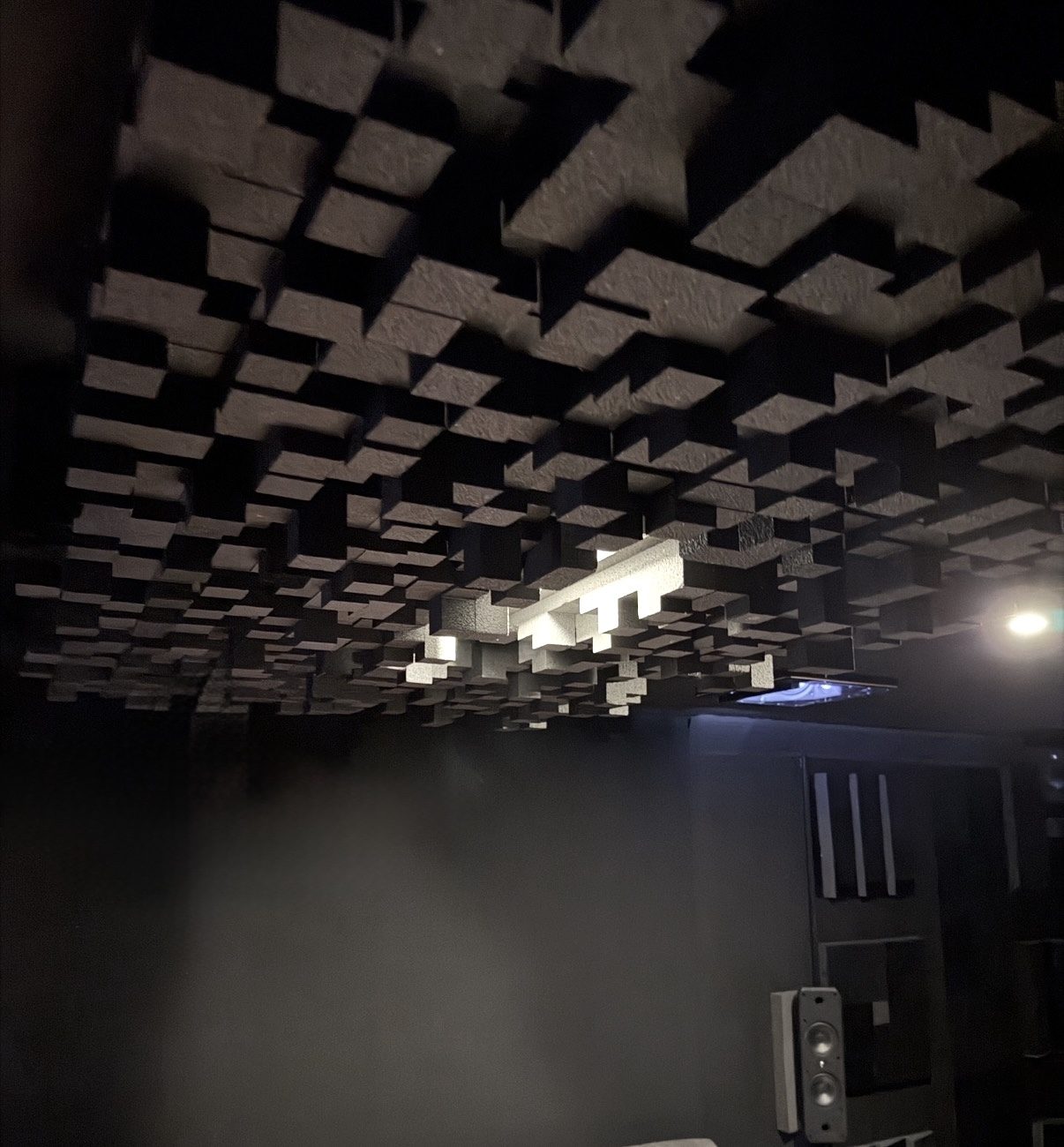
Studio acoustics: absorption, diffusion and the balance between precision and comfort
Absorb, diffuse, or let the room breathe: treating a studio is a matter of dosage. Too little, and analysis becomes impossible; too much, and listening loses its naturalness.
What absorption does
An absorber dissipates part of the acoustic energy, which reduces the sound energy reflected in the room. Porous absorbers (mineral wool, technical foams) are generally effective in the midrange and treble; their effectiveness in the low end depends notably on their thickness, their properties and any air gap left behind them. A thin panel mostly acts at the top of the spectrum and leaves the bottom almost untouched.
Absorption removes energy. Its useful range depends heavily on thickness, which makes the low end particularly demanding.
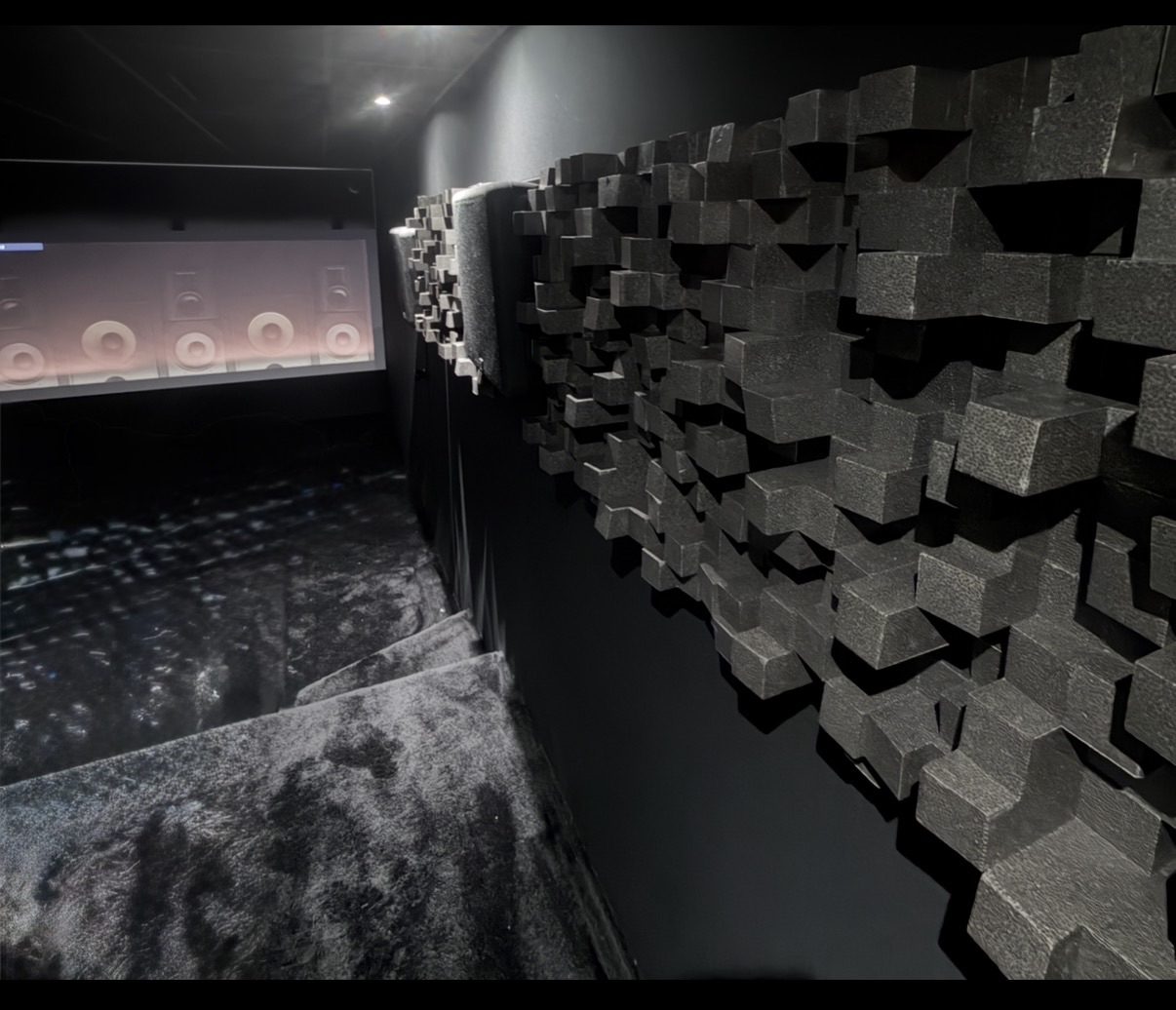
What diffusion does
A diffuser does not remove energy: it redistributes it in time and in several directions. Well designed and placed, it can avoid distinct echoes and overly marked reflections while keeping the room a lively character. It is an approach often used where you do not want to deaden everything, for example on surfaces away from the listening position.
Absorption and diffusion are not opposites: they answer different needs and combine. The question is not "one or the other", but "which, where, and how much".
The low end needs dedicated treatment
The bottom of the spectrum concentrates most of the difficulties of a small or medium control room, because of room modes and SBIR. It is treated with deeper devices — thick porous bass traps, tuned absorbers — often placed in the corners and along the room's boundaries, depending on the modes and the geometry of the room. A standard panel is generally not enough.
Precision versus comfort
A heavily damped control room brings defects into relief, which serves analysis. But pushed too far, it can become tiring over long sessions and represent imperfectly how the music will be heard elsewhere, in normally reverberant rooms. Conversely, a room left too lively flatters the listening but masks problems.
The right compromise depends on use: a mastering studio, a creative studio and an immersive mixing room do not have the same priorities, and the setting is calibrated to the work done there.
How much to treat
There is no universal amount of treatment nor a single reverberation-time value valid for every room: it depends on volume, proportions, use and level of ambition. The goal is regular behaviour — with no dead zone or marked resonance — rather than a number reached for its own sake.
Measure, then adjust
Treatment is set in stages, measuring after each intervention: reverberation time per band, early reflections, low-frequency response. A prediction and analysis tool such as Home Theater Maestro lets you estimate some of these behaviours and compare measurements against a model of the room. These predictions remain decision aids, not guarantees of result.
To understand the phenomena this treatment addresses, see the acoustic principles of a control room.
Absorbing, diffusing and treating the low end are three different levers. The right dosage is calibrated to the room's use, and verified by measurement.
A project in mind ?
Send us a few words about your tracks, and we will reply with a tailored quote.
Contact us