
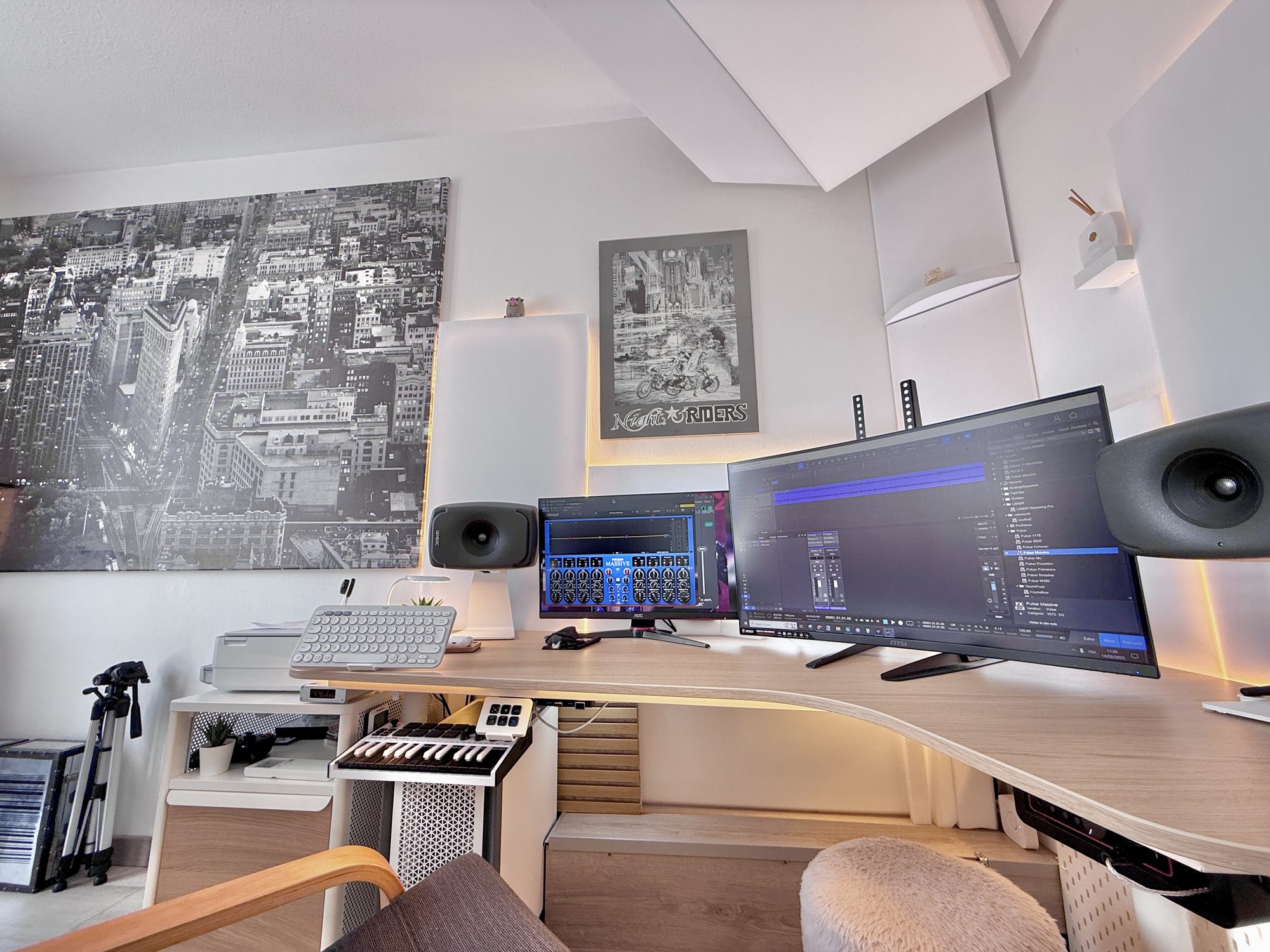
DAW and monitoring: building a coherent listening chain for mixing
Between the DAW and the speakers, every link affects how reliable the listening is. A coherent chain avoids making decisions on artefacts rather than on the music.
The audio interface
The interface converts the DAW's digital signal into an analog signal sent to the speakers. For monitoring, what matters is that it offers clean conversion, a sufficient output level and a stable clock. Above a certain quality level, it is generally not the interface that limits mixing decisions, but the room and the speakers.
In a monitoring chain, the performance of the speakers, the acoustics, the positioning and the electronics all contribute to how reliable the listening is. In a properly equipped control room, acoustics and positioning often become decisive factors.
Gain staging
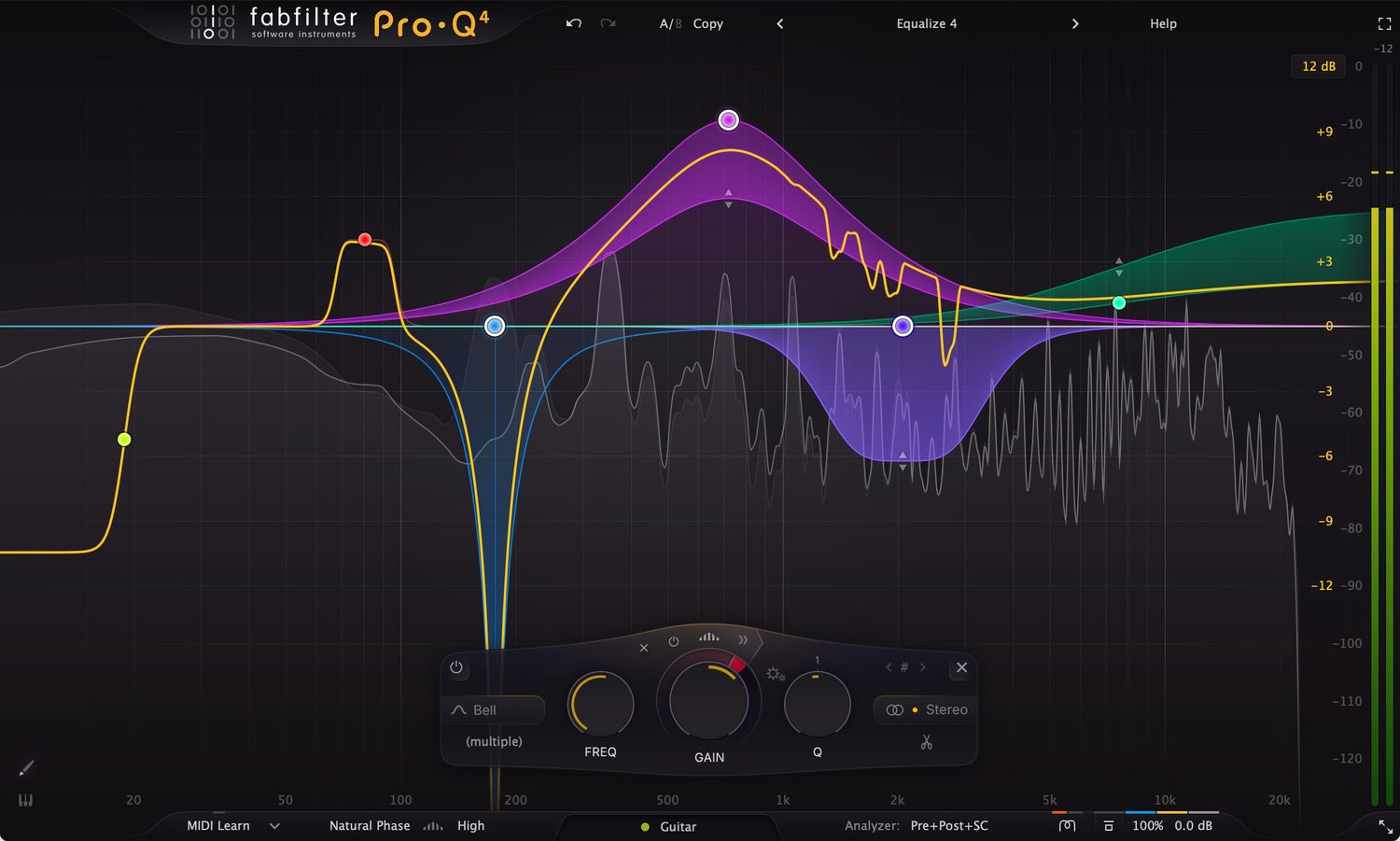
A consistent working level in the DAW, without saturating the buses or applying unintended processing on the master while analysing, avoids judging an already distorted signal. The idea is not to hit a precise number, but to keep a comfortable headroom and a clean signal from the start to the end of the chain. Bit-depth reduction and dithering normally apply at the final resolution reduction for the intended output, rather than as systematic processing during mixing.
The listening level
The perception of spectral balance varies with level: at low volume, the low end and extreme treble are generally perceived less than at high volume. Always listening at the same reference level, and being able to return to it easily, makes decisions more reproducible. A moderate level also tires the ear less over a session, which helps keep judgement stable.
The monitor controller
A monitor controller, hardware or software, centralises what is used day to day: level setting, mono switching, quick attenuation (dim), switching between several sets of speakers or between several sources. These functions do not change the sound, but they make comparisons easier, and comparisons are at the heart of mixing and mastering.
Listening on references
Comparing your work to known reference mixes, and listening to it on several systems, helps spot what the room or habit conceal. Checking in mono remains a simple and revealing test of compatibility and of how well the image holds. These checks complement the main listening; they do not replace it.
The room is part of the chain
The best electronic chain does not compensate for a room that distorts the low end or returns too many early reflections. Speaker placement (placing your monitors), their choice (choosing your monitors) and the acoustics (control-room acoustic principles) remain decisive. A prediction and analysis tool such as Home Theater Maestro helps locate what, in the listening, comes from the room rather than from the chain.
Clean interface, controlled gain, constant listening level, easy comparisons: a coherent chain serves the decision. But it never replaces the room.
A project in mind ?
Send us a few words about your tracks, and we will reply with a tailored quote.
Contact us