
Calibrating a listening system for Dolby Atmos mixing
Calibrating an immersive system means aligning levels, distances and the low end so that each channel is reproduced as intended at the reference position. It is what allows a mix to translate elsewhere.
Why calibrate
A multichannel system has many speakers, at different distances and orientations. Without calibration, nothing guarantees that a sound sent at equal level to two channels reaches the ear at the same level and the same instant. Calibration puts the system into a known reference state, so that the decisions made while mixing have a chance of holding up on other, correctly set systems. It notably includes setting levels, equalisation and delays to obtain a coherent response between channels at the reference position.
Calibrating means putting the system into a reproducible reference state. It is the condition for a mix to be transferable.
Reference levels
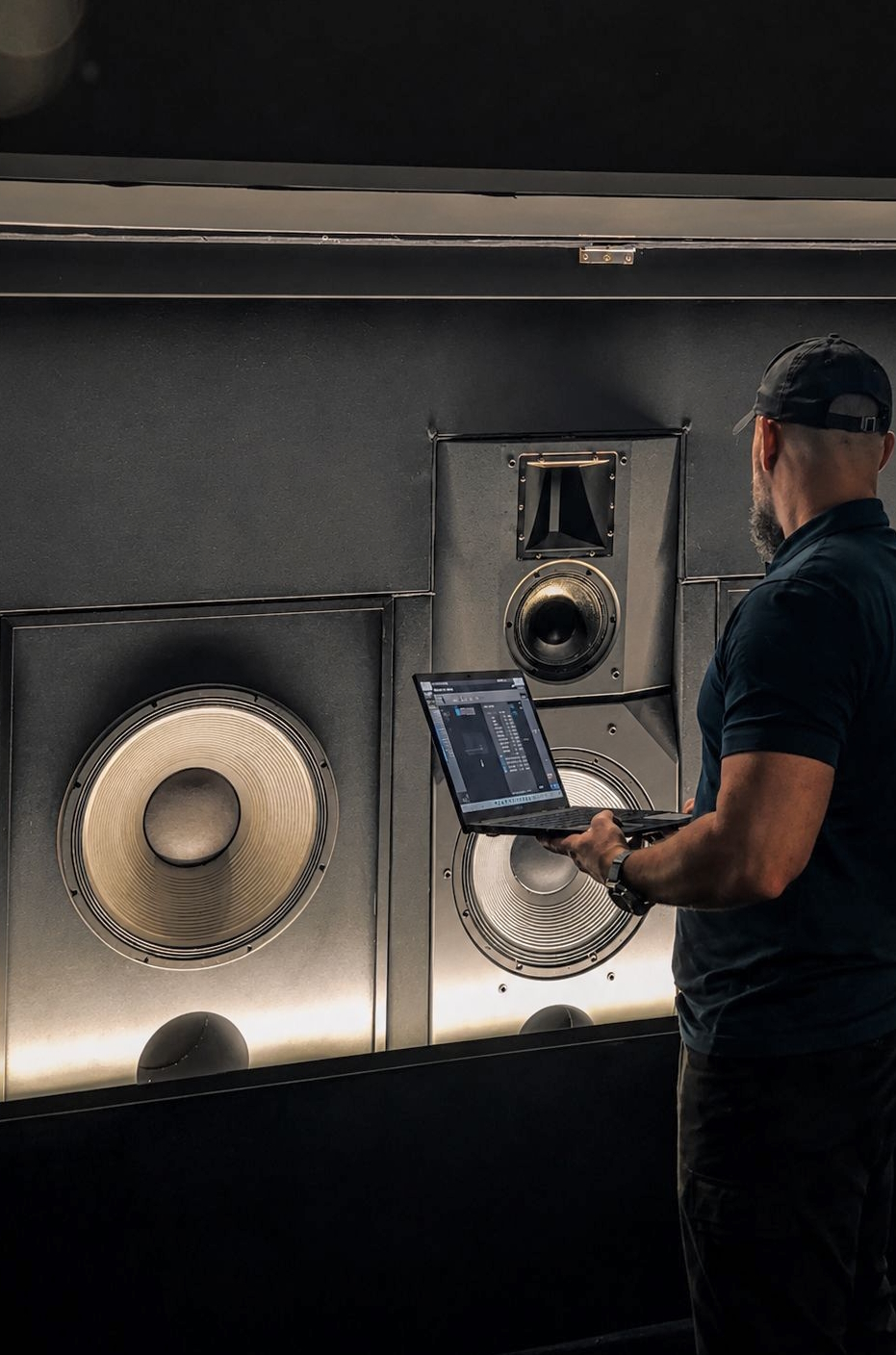
The first step is to set each channel to produce the same level at the reference position, using a calibration noise and a sound-level meter. The reference level chosen is defined by the applicable Dolby recommendations for the intended context, and it can differ between cinema and music. Rather than quoting a value from memory, one refers to the document in force at the time of setup.
Distances and delays
Since the speakers are not all the same distance from the listening position, a time alignment compensates for the differences, so that the sounds of the various channels arrive coherently. This setting is derived from the measured distances, and it complements the level matching.
Bass management and the LFE channel
Bass management decides which low frequencies are reproduced by the speakers and which are redirected to the subwoofer, with consistent crossover frequencies and levels across channels. The LFE channel — the ".1" — is a separate low-frequency channel. In the Dolby Atmos Music recommendations, its acoustic output is set 10 dB above that of a main channel over its frequency range. These settings are covered from a monitoring standpoint in stereo or multichannel monitoring.
Measurement at the centre of the process
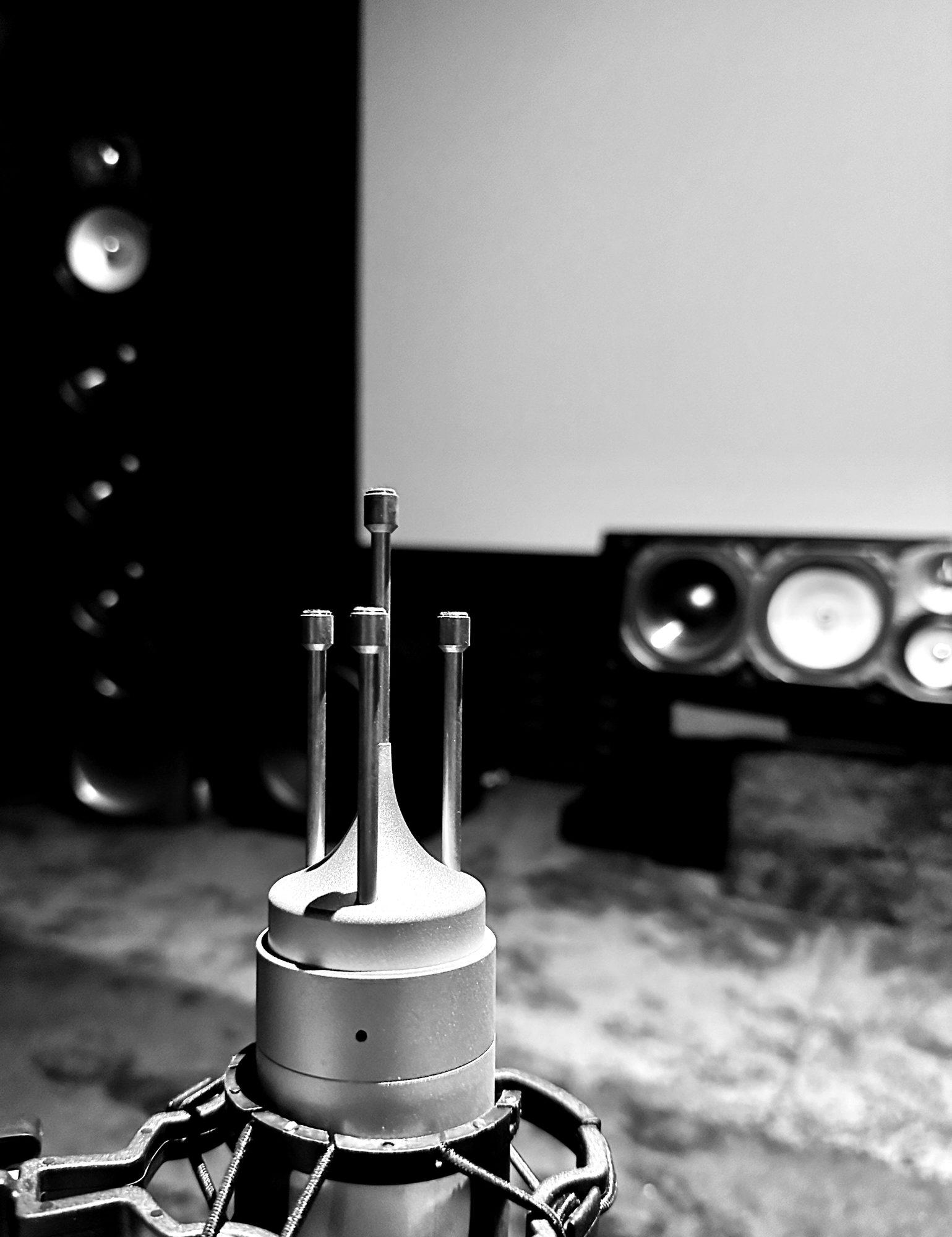
Calibration relies on measurement: measurement microphone, test signal, readings of levels, delays and frequency response per channel. A tool such as Home Theater Maestro lets you import measurements, place the channels in a model of the room and compare the result against a prediction, seat by seat. These predictions are decision aids, to be validated by real measurement; the software issues no certification and does not guarantee an acoustic result.
What calibration does not do
Calibration sets levels, delays and routing. It does not correct an untreated room: a modal resonance or an overly strong early reflection remains an acoustic problem that electronics do not make disappear. It comes after placement and treatment, not in their place. For what precedes it, see the acoustic principles of a control room and designing a Dolby Atmos mixing room.
Calibration comes after the design and positioning of the system and allows its performance to be verified and adjusted; it does not replace acoustic treatment.
A project in mind ?
Send us a few words about your tracks, and we will reply with a tailored quote.
Contact us